
Meta’s Next Big Bet: Moving AI from Your Face to Your Chest
Meta is reportedly developing an AI-powered pendant designed to record and process conversations, with plans to begin testing the device within the next year. According to an internal memo leaked to The Information, this new wearable heavily builds on Meta’s late-2025 acquisition of Limitless, a startup known for creating clip-on AI necklaces. By shifting focus toward lightweight audio-recording jewelry, Meta hopes to find a more comfortable, socially acceptable sweet spot for everyday artificial intelligence.
The move is part of a broader corporate push to expand Meta’s “Wearables for Work” business subscription and inject new life into its struggling hardware division. Reality Labs, Meta’s hardware arm, suffered a massive 4 billion dollar loss in the first quarter of this year alone. While previous AI wearables from other tech companies have notoriously flopped due to privacy worries and limited utility, Meta is betting that a mix of new AI pendants and expanded smart glasses will finally convince consumers—and corporate offices—to embrace wearable tech.
Forget Compute: Chip Startup XCENA Secures $135M to Fix AI’s Memory Crisis
Chip architecture startup XCENA has closed a massive 135 million dollar Series B funding round at a 570 million dollar valuation, banking on the idea that the true bottleneck for artificial intelligence isn’t raw computing power—it’s memory. Every single time an AI model generates a word, data must repeatedly travel back and forth between short-term memory (DRAM) and expensive, power-hungry processors. Founded by veterans of memory giants Samsung and SK Hynix, XCENA is looking to eliminate this costly “data relay race” by introducing a new chip that handles routine data processing directly inside the memory module itself.
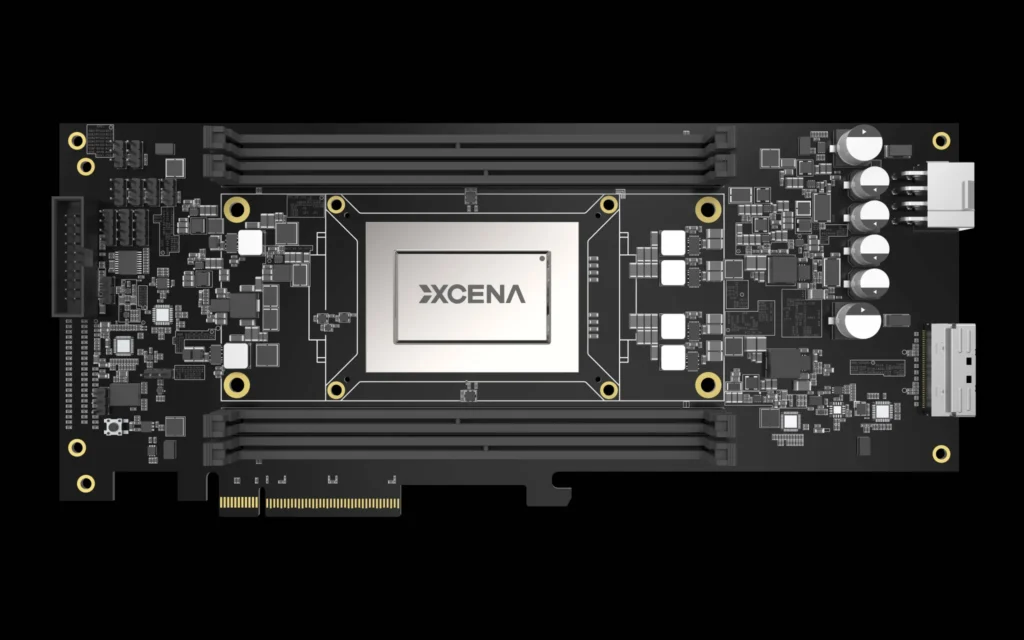
The startup’s prototype chip, the MX1, uses an open-source RISC-V design to act as an express lane between data and the CPU. By bringing compute capabilities directly to the data rather than routing it away, XCENA claims its tech can drastically consolidate infrastructure, potentially condensing what normally takes 10 servers down into just one. Mass production is slated to begin at Samsung’s foundries by the end of this year, targeting cloud giants and hyperscalers desperate to shave hundreds of millions of dollars off their ballooning AI operational costs.
One Step From a Trillion: Anthropic Snags $65B in Final Mega-Round Before IPO
Anthropic has locked in a staggering 65 billion dollar Series H funding round, pushing its post-money valuation to an eye-watering 965 billion dollars. Widely viewed as the AI startup’s final private fundraising haul before its highly anticipated debut on the public stock market, the massive round was co-led by heavyweight venture firms including Altimeter Capital, Dragoneer, and Sequoia Capital. The total includes 15 billion dollars in previously committed capital from cloud hyperscalers, featuring a fresh 5 billion dollar injection from Amazon.

The cash influx arrives on the heels of explosive corporate growth, with Anthropic’s annualized revenue run rate recently crossing 47 billion dollars, driven largely by enterprise adoption of its Claude Code developer tools. The company plans to weaponize the new capital to scale up compute infrastructure for its newly released Claude Opus 4.8 model and to accelerate safety research. The historic round intensifies an aggressive arms race with archrival OpenAI—which raised 122 billion dollars earlier this spring—as both companies sprint to secure dominance ahead of their respective market debuts.
Smarter, Not Louder: Anthropic Drops Claude Opus 4.8 to Tackle Complex Code Migrations
Just 41 days after its previous version, Anthropic has launched Opus 4.8, its most advanced publicly available large language model. This aggressive, faster-than-usual release cycle follows a lukewarm reception to Opus 4.7 and mounting market pressure from rivals like OpenAI and Google. Rather than just chasing raw performance metrics, Opus 4.8 focuses heavily on data reliability and error management; early testers, including Bridgewater Associates, note the model is significantly better at proactively flagging unsupported claims and uncertainties in bad or messy data instead of leaving them for users to catch.
Alongside the model, Anthropic introduced a research preview called Dynamic Workflows, a feature built to coordinate massive, complex tasks across hundreds of parallel subagents. Integrated directly with developer tools like Claude Code, the system can autonomously orchestrate codebase-scale migrations spanning hundreds of thousands of lines of code, using a company’s existing test suite as its quality benchmark. Additionally, Anthropic teased that its ultra-advanced “Mythos” model—which was temporarily held back due to cybersecurity concerns—could see a wider public release in the coming weeks as final safety safeguards wrap up.
Tune in, Speed Up: YouTube Unveils Smart Recs and Adaptive Audio for Podcasts
YouTube is rolling out a suite of AI-driven features designed to capture a larger slice of the podcast market and streamline the listening experience. The biggest update is an intelligent recommendation engine that analyzes transcript themes, vocal tone, and listener history to suggest specific, highly relevant podcast episodes rather than just pushing entire channels. Alongside this, YouTube is introducing “Auto-Speed,” a feature that uses machine learning to subtly compress natural pauses and silences in real time, shortening total playback time without distorting the host’s natural speaking voice.

The platform is also making things easier for creators by automating the tedious parts of production. New tools will generate automated, timestamped show notes, SEO-optimized descriptions, and localized language translations with a single click. By deepening its tech stack, YouTube is making a clear play against Spotify and Apple Podcasts, transforming its massive video ecosystem into an optimized, highly accessible audio hub for both casual listeners and power users.