Meta’s Exodus Fuels Thinking Machines’ Rise in AI Race
Meta’s talent exodus has proven to be Thinking Machines Lab’s gain as the AI startup makes a significant leap forward. Weiyao Wang, a former Meta engineer, recently joined Thinking Machines after contributing to major projects like SAM3D. His move comes as the lab scales up, securing a multi-billion-dollar cloud deal with Google, allowing it to use cutting-edge Nvidia GB300 chips. This partnership places Thinking Machines on par with major players like Meta and Anthropic, with a growing team poached from Meta’s ranks.

The lab has also captured attention by attracting renowned experts, including PyTorch co-founder Soumith Chintala and several other former Meta veterans. As Thinking Machines accelerates its growth, its valuation has soared to $12 billion, offering substantial financial upside. With its expanding infrastructure and talent, the company seems poised to challenge established AI giants.
Google’s $40B Bet Hands Anthropic a Massive Leg‑Up in the AI Arms Race
Google is preparing to inject up to $40 billion into AI startup Anthropic, combining direct cash and massive compute capacity support in one of the largest tech investments in history. The initial tranche is $10 billion now at a reported $350 billion valuation, with another $30 billion tied to performance targets, signaling deep confidence — and strategic dependency — between the companies. This is about more than money; it secures years of computing power that Anthropic needs to train and run frontier AI models.
The deal comes as Anthropic races to scale its Claude family of models amid surging demand and infrastructure bottlenecks. Google’s cloud and TPU (Tensor Processing Unit) resources, combined with other partnerships (like Amazon’s recent multi‑billion investment), ensure Anthropic has the hardware to compete with rivals such as OpenAI and Microsoft. In plain terms: this isn’t just VC capital — it’s a compute‑backed war chest in the global AI showdown.
OpenAI’s GPT‑5.5 Drop Pushes ChatGPT Toward ‘AI Superapp’ Reality
OpenAI has officially launched its latest large language model, GPT‑5.5, on April 23, 2026 — a release the company is pitching not as a minor update, but as a strategic step toward its long‑term “superapp” vision. The new model is described as the smartest, most intuitive generation yet, significantly stronger at complex tasks like multi‑step reasoning, advanced coding, research workflows, and deeper knowledge work compared with its predecessor, GPT‑5.4. Early rollout includes availability in ChatGPT’s paid tiers (Plus, Pro, Business, and Enterprise), with GPT‑5.5 Pro reserved for higher‑tier customers.
What makes GPT‑5.5 notable isn’t just raw performance, but how it fits into OpenAI’s broader product direction: the company is trying to unify chat, coding (via Codex), and task execution into a more agent‑like and cohesive experience — a foundational shift toward an AI superapp rather than discrete features. The model offers efficiency improvements, better autonomous task handling, and stronger contextual reasoning, signaling that future AI environments could feel less like a chatbot and more like a comprehensive digital assistant across workflows.
Tesla Doubles Down on AI and Robotics with a Record $25 B Capital Push
Tesla has dramatically increased its 2026 capital expenditure plan to about $25 billion, a massive uptick from earlier forecasts and roughly three times its typical annual spending, as CEO Elon Musk steers the company toward future‑focused technologies rather than its traditional car business. The boost in spending is aimed at funding Tesla’s shift into artificial intelligence, robotics, autonomous vehicles, and next‑generation chip and factory infrastructure, signaling that the company is willing to burn cash now for potential long‑term dominance in these adjacent tech arenas.
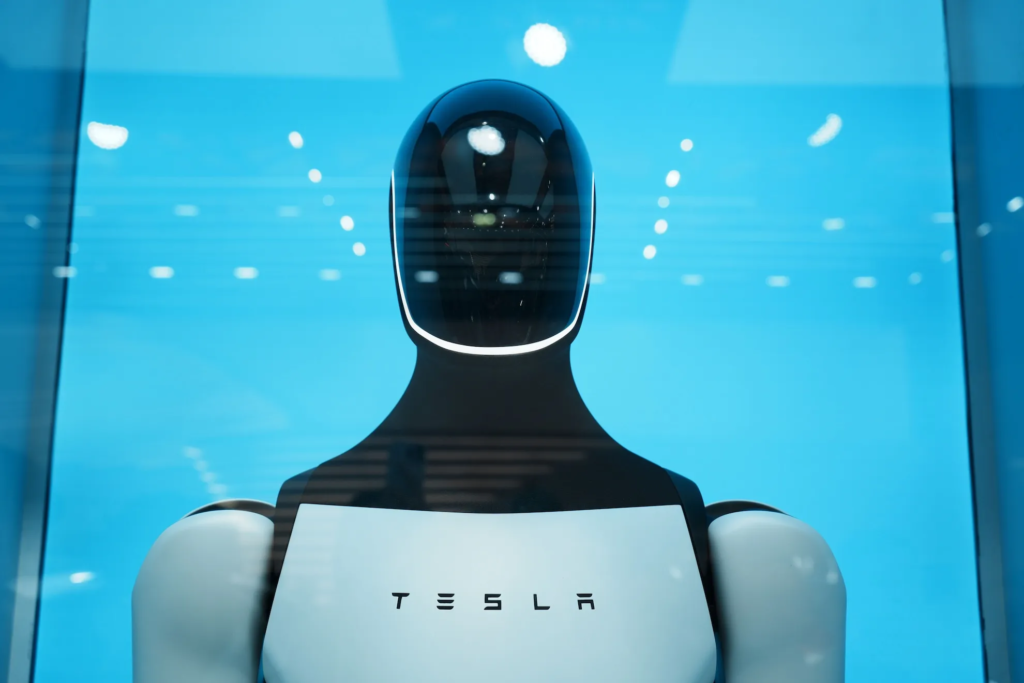
This isn’t small‑scale R&D — it involves financing multiple new factories, expanding **robotaxi services, pushing forward production of the humanoid Optimus robot, and building out AI and chip design capabilities (including facilities like the large‑scale AI compute fab plans around Texas). That ambition comes with a hefty cost: Tesla expects negative free cash flow this year despite recent quarterly profits, and its traditional EV margins and deliveries are under pressure from rising competition and fading incentives. Investors are reacting unevenly, with some lauding the bold pivot while others warn that such heavy spending without established revenue streams could undermine financial stability.
Google Turns Workspace AI Into Your Digital Office Intern
Google has just rolled out a major set of upgrades to Google Workspace that lean heavily into artificial intelligence, positioning the suite not just as productivity software but as a smart assistant that can take over routine work. The centerpiece is a new system called Workspace Intelligence, which uses generative AI (powered by Gemini) to understand your Gmail, Calendar, Chat, Drive, Docs, Sheets, and Slides, and then automate tasks across them — from drafting emails and refining documents to organizing spreadsheets and converting unstructured data into usable formats. Admins can control what the AI can access, but the more data it sees, the more helpful it becomes.
The upgrades aim to save time by reducing busy work: Sheets can now be built and filled automatically based on prompts, Docs gets smarter writing and editing help tuned to your style, and the AI can infer what you’re trying to do rather than making you drive every step manually. Think of it as having a tireless office intern that accelerates grunt work so humans can focus on higher‑value thinking — but with the trade‑off that workplace tasks are becoming increasingly intertwined with AI assistance.