
AI or Remix? Cursor’s ‘New’ Coding Model Sparks Transparency Debate
AI coding startup Cursor recently launched its new model, Composer 2, marketing it as a breakthrough with “frontier-level coding intelligence.” However, users and researchers quickly spotted clues suggesting the model wasn’t entirely built from scratch. Cursor has now acknowledged that Composer 2 was actually developed on top of Moonshot AI’s open-weight model, Kimi, rather than being purely in-house as initially implied.

The revelation has triggered wider concerns about transparency in the AI industry. While building on open-source models is common, critics argue Cursor failed to clearly disclose this foundation upfront. The incident highlights growing tensions around attribution, licensing, and trust—especially as companies increasingly fine-tune existing models instead of developing entirely new ones. It also underscores how quickly the AI community can uncover such details, pushing companies toward greater openness.
Musk’s ‘Terafab’: The Bold Plan to Build Chips on Earth—and Power AI in Space
Elon Musk has unveiled an ambitious chip manufacturing initiative called Terafab, a joint effort between Tesla and SpaceX (with involvement from xAI). The project centers on building a massive semiconductor fabrication facility—likely in Austin, Texas—that can design, test, and produce advanced AI chips all in one place. The goal is to reduce reliance on external suppliers and meet the rapidly growing demand for chips powering electric vehicles, humanoid robots, and AI systems.
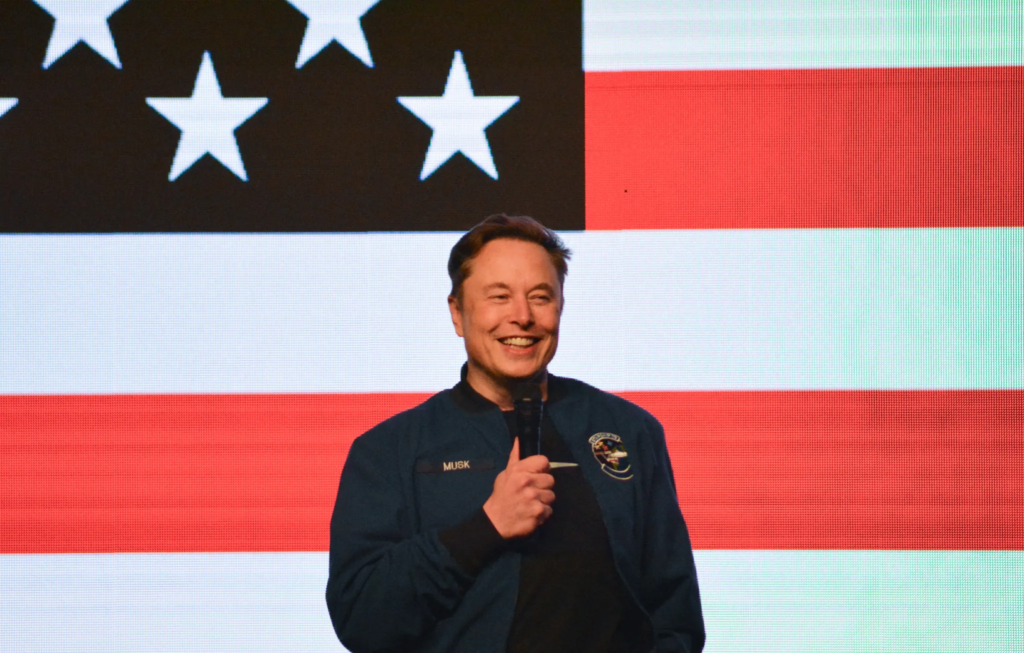
What makes the plan especially bold is its long-term vision: Musk wants these chips not just for Earth-based uses, but also for space-based AI computing. He outlined ideas for solar-powered AI satellites and even orbital data centers, arguing that space could eventually offer cheaper and more scalable compute due to abundant solar energy. While the project could cost tens of billions and faces major technical hurdles, Musk frames it as a necessary step toward a future of massive AI capacity—and even a “galactic civilization.
Behind Closed Doors: Pentagon Signals Deal with Anthropic—Days Before Trump Pulled the Plug”
A new court filing has revealed a striking contradiction in the ongoing dispute between the Pentagon and AI company Anthropic. According to internal communications cited in the filing, the U.S. Department of Defense told Anthropic that the two sides were “nearly aligned” on key contract terms—just one week before former President Donald Trump publicly declared the relationship “kaput.”

The disclosure raises questions about how and why negotiations collapsed so abruptly. The broader conflict centers on Anthropic’s refusal to allow its AI models to be used for things like autonomous weapons or mass surveillance, which the Pentagon sees as unacceptable limits. The case, now playing out in court, highlights a deeper tension between government demands for unrestricted AI capabilities and tech companies’ efforts to impose ethical boundaries—while also exposing a gap between private negotiations and public political messaging.
Bezos’ $100B AI Bet: Reinventing Old Factories for the Future”
Jeff Bezos is reportedly exploring one of the largest industrial investment plays ever—a $100 billion fund aimed at acquiring traditional manufacturing companies and transforming them with artificial intelligence. The idea is to buy up firms in sectors like chipmaking, defense, and aerospace, then modernize them using AI-driven automation and efficiency tools.

The effort is closely tied to his newer AI venture, Project Prometheus, which is developing systems that can simulate and optimize real-world industrial processes. By combining large-scale acquisitions with advanced AI, Bezos is essentially betting that the next big tech revolution isn’t just digital—but physical, reshaping factories and supply chains. If successful, the fund could rival the scale of major investment vehicles like SoftBank’s Vision Fund and mark a major shift toward AI-powered industrial transformation.
From Food Delivery to Data Mining: DoorDash Turns Gig Workers into AI Trainers”
DoorDash has introduced a new app called “Tasks,” expanding beyond food delivery by paying couriers to complete small digital jobs like recording videos, taking photos, or submitting audio clips. These tasks include filming everyday activities—such as cooking, cleaning, or speaking in different languages—with the goal of generating real-world data to train AI and robotics systems.
The move reflects a broader shift in the gig economy, where human workers are increasingly being used to produce training data for AI. While DoorDash presents it as a flexible way for couriers to earn extra income, early reports suggest the pay can vary widely and sometimes be quite low for the effort involved. At the same time, the approach raises concerns around privacy and labor value, as workers are essentially helping build the very AI systems that could one day replace similar forms of work.